This website uses cookies. For more informacition about cookies, visit Cookies section of the site. It is your sole responsibility not allow or disable the usage of cookies. In such a case, it may be that limited functionality or exclusion of some parts of the browsed web site.
A townhouse near the Holy Trinity Square was set for a promising future as a charming weekend retreat, intended to preserve as much of its original period atmosphere as possible. However, in the advanced stages of its reconstruction—based on heritage research and an effort to enhance all defining historical details—a fire struck. The blaze, which started in the well-known Banka Lásky building, consumed six other structures, including this house. The newly completed roof and ceilings were destroyed, along with damage to other parts of the building. All work had to start over from scratch. Despite these hardships, the investor did not lower their standards, and the reconstruction retained its full scope and complexity. All preserved surfaces were restored, stone fragments and doorways were cleaned, and wooden elements were carefully repaired. Where preservation was not possible, faithful replicas were created. The interior, however, is uncompromisingly contemporary—it does not mimic the past but openly acknowledges its present-day nature, meeting high demands for modern living and technological comfort. Set on a steep slope, the house appears monumental from the outside. However, its interior layout is not excessively large but rather rich in varied floor levels. The mázhaus (entrance hall) retains its historical character, serving as a welcoming foyer. The ground floor houses a guest apartment, while the upper floor is designed as a weekend residence. The original stone cellar, accessed through a dramatic vaulted corridor, has been transformed into a private wine cellar. The rugged terrain of Banská Štiavnica is reflected in the interiors of its homes, making them anything but monotonous or formulaic. Each one is unique, authentic. This townhouse is no exception. Every room offers an element of surprise—whether in the form of spatial or lighting variations, or through references to the past, complemented by contemporary furniture, lighting, and accessories. collaboration: Ondrej Strýček; photos: Soňa Sadloňová


The former armory building has found a new owner and, with it, an entirely new production purpose. The old, abandoned hall had been deteriorating for years, but its concrete structure retained its fundamental qualities, and its original raw character became an integral part of the renovation concept. The building is now home to MAPRO, a company specializing in the development, manufacturing, and programming of industrial automation with a strong focus on innovation. The renovation approach was based on preserving the original character of the prefabricated concrete hall's interior. The space was stripped down to its “bare bones,” leaving all concrete structural elements and surfaces deliberately exposed. The vast hall now accommodates a new functional program, distributed across two floors with distinct characteristics. The lower level is dedicated to production, while the upper level features a five-tract layout designed for creative activities and development. In the context of the original structure, the offices benefit from high ceilings, while additional functions such as meeting rooms, kitchens, and sanitary facilities take the form of lower, inserted modules. Additionally, the upper floor takes advantage of the sloping terrain and the beautiful natural surroundings—not only through views of the forest greenery but also via direct access to an outdoor area at the top of the site. An adjacent extension further expands the functional and spatial concept, adding a training room and a staff apartment on the upper level. Composed of two volumes of different heights, separated by a courtyard and unified by a continuous canopy, the extension plays with contrasts—alternating between solid masses and open spaces to create a dynamic architectural composition. The renovation methods, spatial configurations, material choices, and detailing are all intended to reflect MAPRO’s innovative ambitions and its commitment to the gradual enhancement of the entire site. collaboration: Eugen Kullman, Ondrej Strýček; photography: Soňa Sadloňová


Continuity is every architect’s ally. Rádio Expres is a recurring theme for us, always bringing new challenges. The new broadcasting studio introduced many innovations, even from an interior design perspective. Times are changing, and with the rise of podcasts and online streaming, radio broadcasting has evolved from a purely auditory medium into a visual experience. The studio is no longer an invisible cabinet hidden from the public but a multifunctional, technologically advanced space equipped with cameras and visuals designed to enhance the atmosphere of each show, whether it be a music program or a news segment. At the center of the space, we placed the main broadcasting console in the form of a white Corian hexagon, accommodating six workstations for editors and the DJ. The core of this hexagonal structure houses all the essential broadcasting technology. The backdrop of the studio features a multimedia wall composed of monitors, allowing for dynamic visual effects synchronized with adjustable LED lighting. A dedicated section in the corner, furnished with a high table and seating, serves as the setting for Braňo Závodský’s popular podcast. Along with precisely tuned acoustic treatments on the walls and ceilings, the studio aims to evoke a grand stage for countless engaging experiences. collaboration: Eugen Kullman


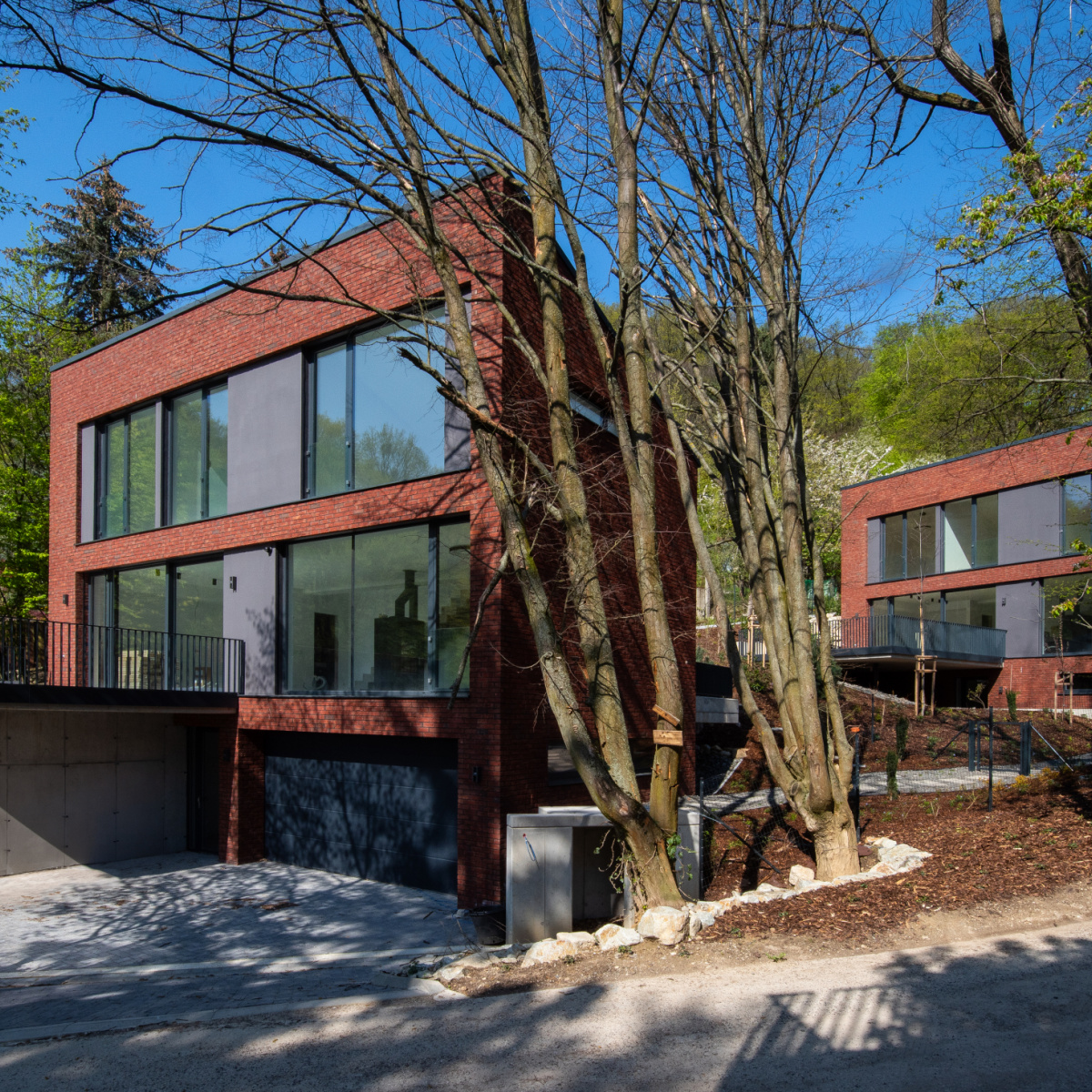
Two identical recreational facilities in the surroundings of a picturesque gorge, from where no one wants to go back to the hustle and bustle of the city. Despite the above-standard and in many limiting requirements that this part of Bratislava has for construction, buildings were created that have a spatial and functional program spread over three floors. The ground floor, where there is a main living space with a living room, kitchen and dining room, is connected by extensive outdoor terraces. The attic floor with the night zone is covered by a slatted roof. The red facade brick gives both houses a muted look that benefits the forest nature of the landscape. It is a part of the interior scenery through the large glazing together with views of the distant city. cooperation: Filip Trajteľ; photo: Soňa Sadloňová
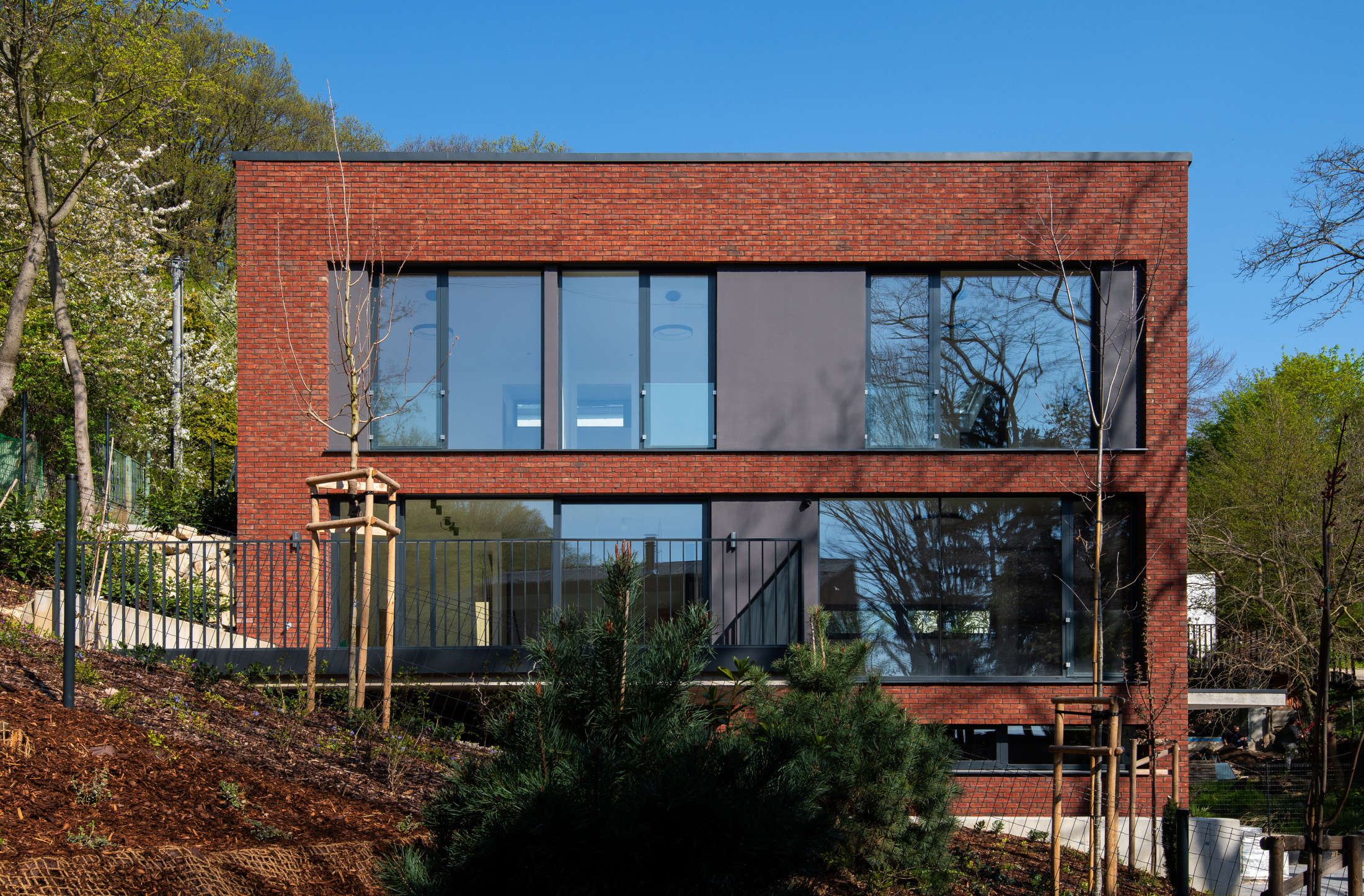
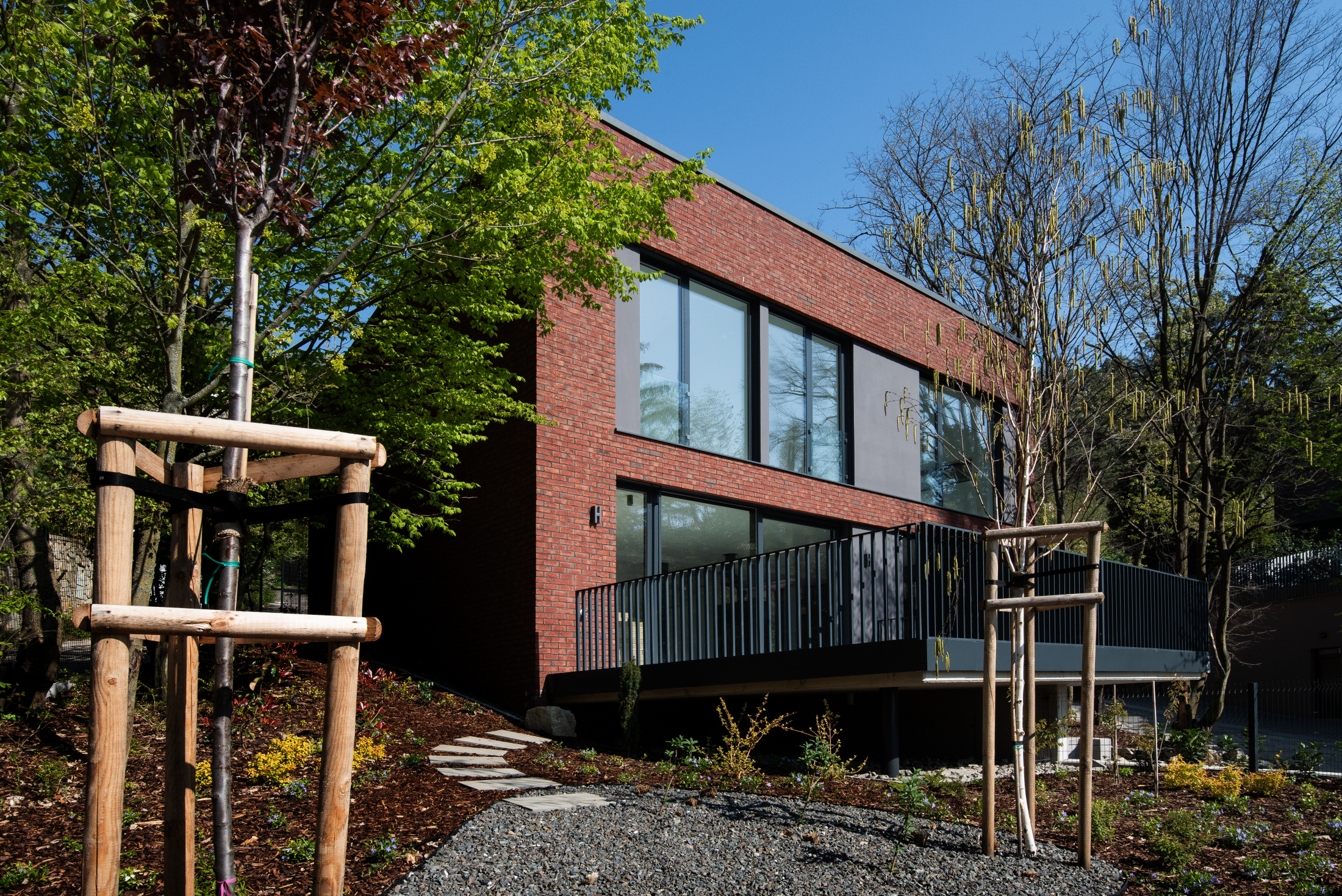
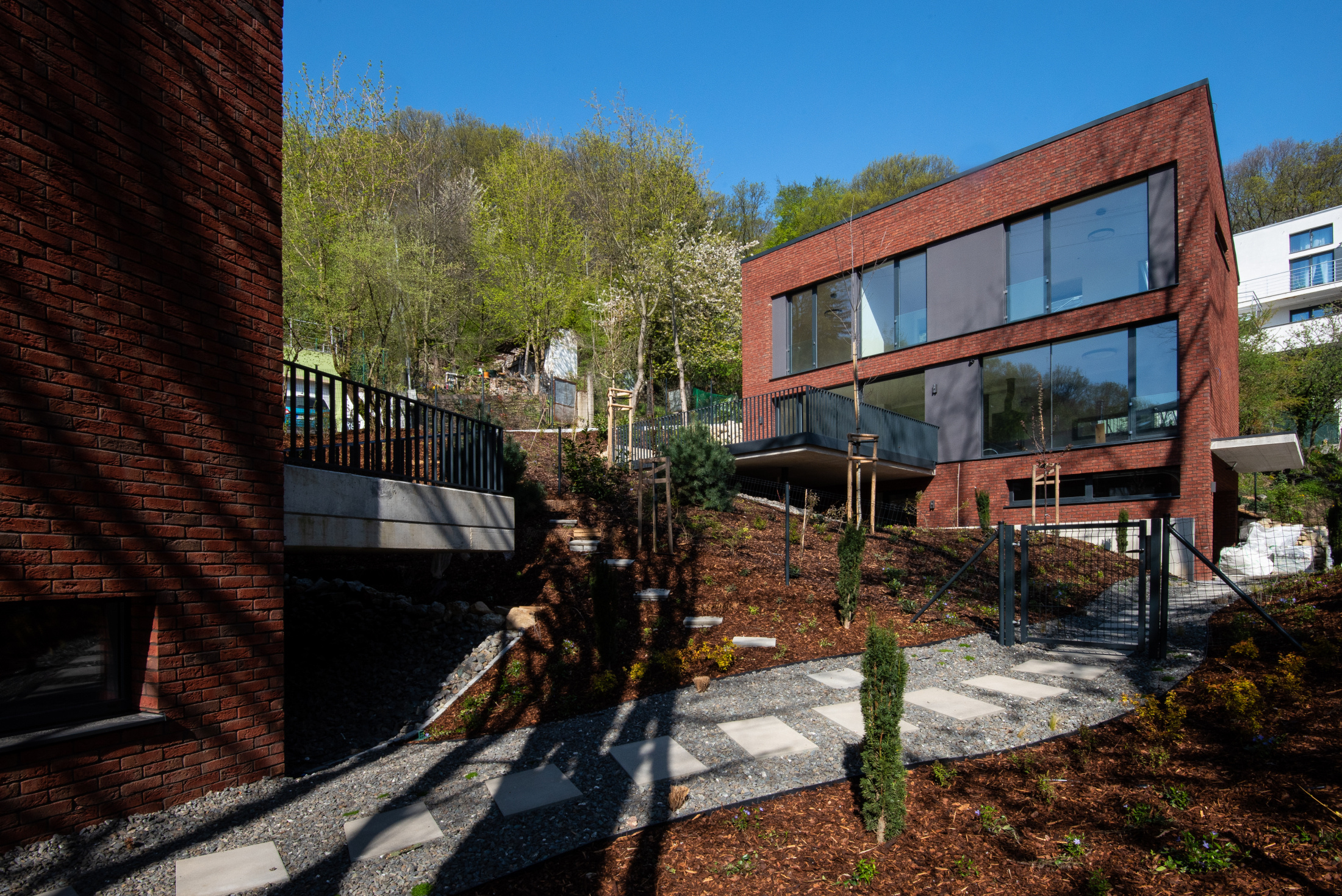
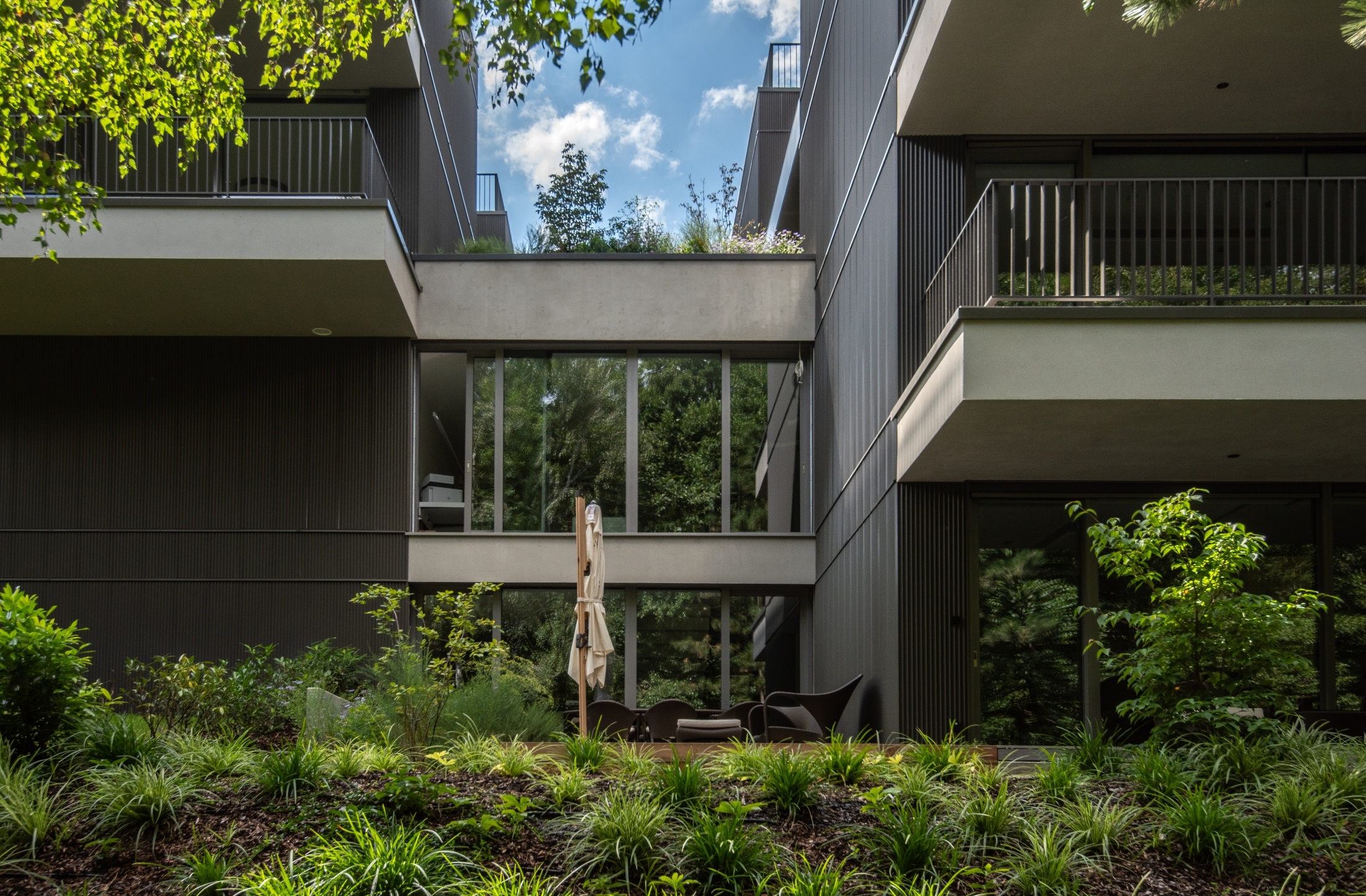
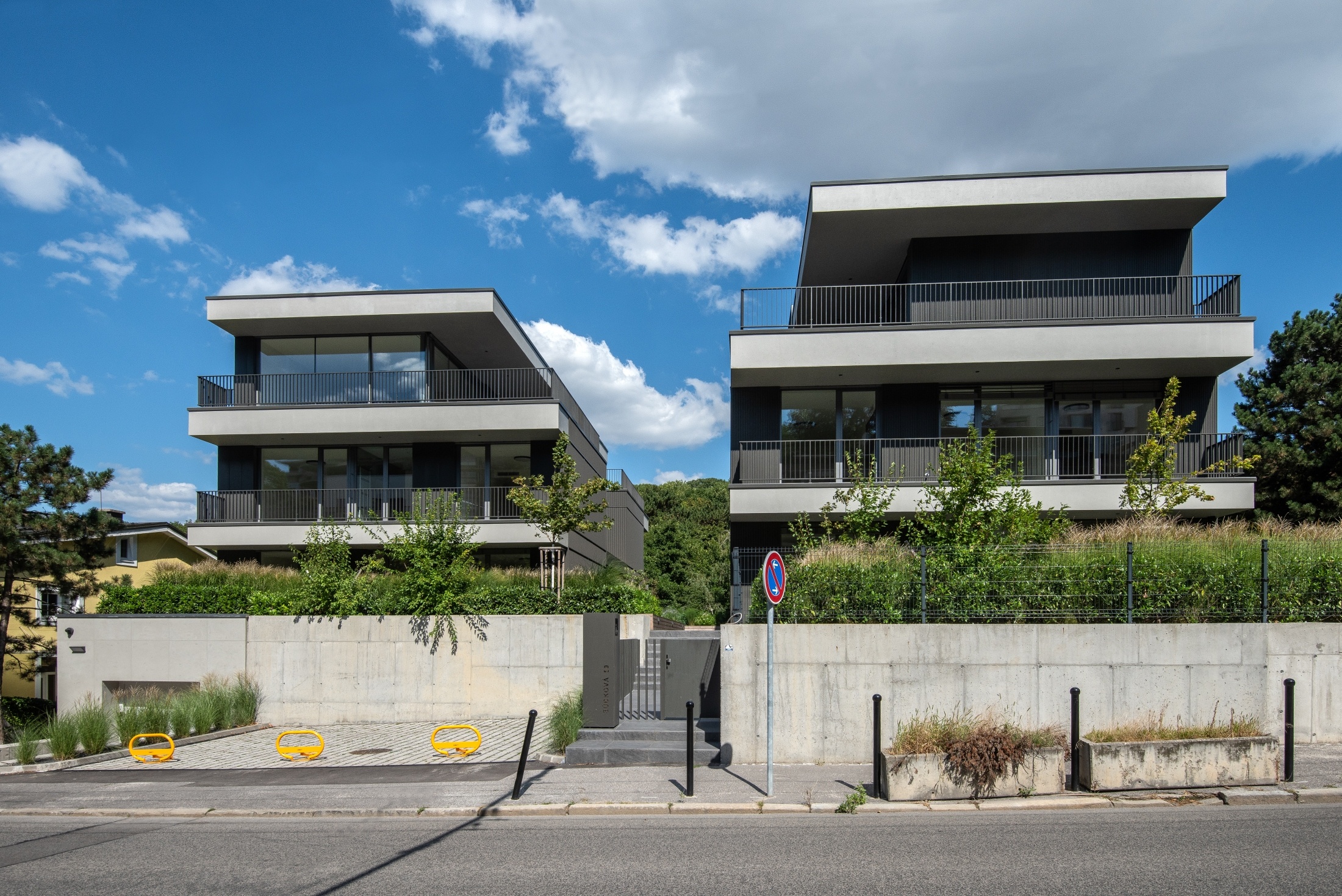
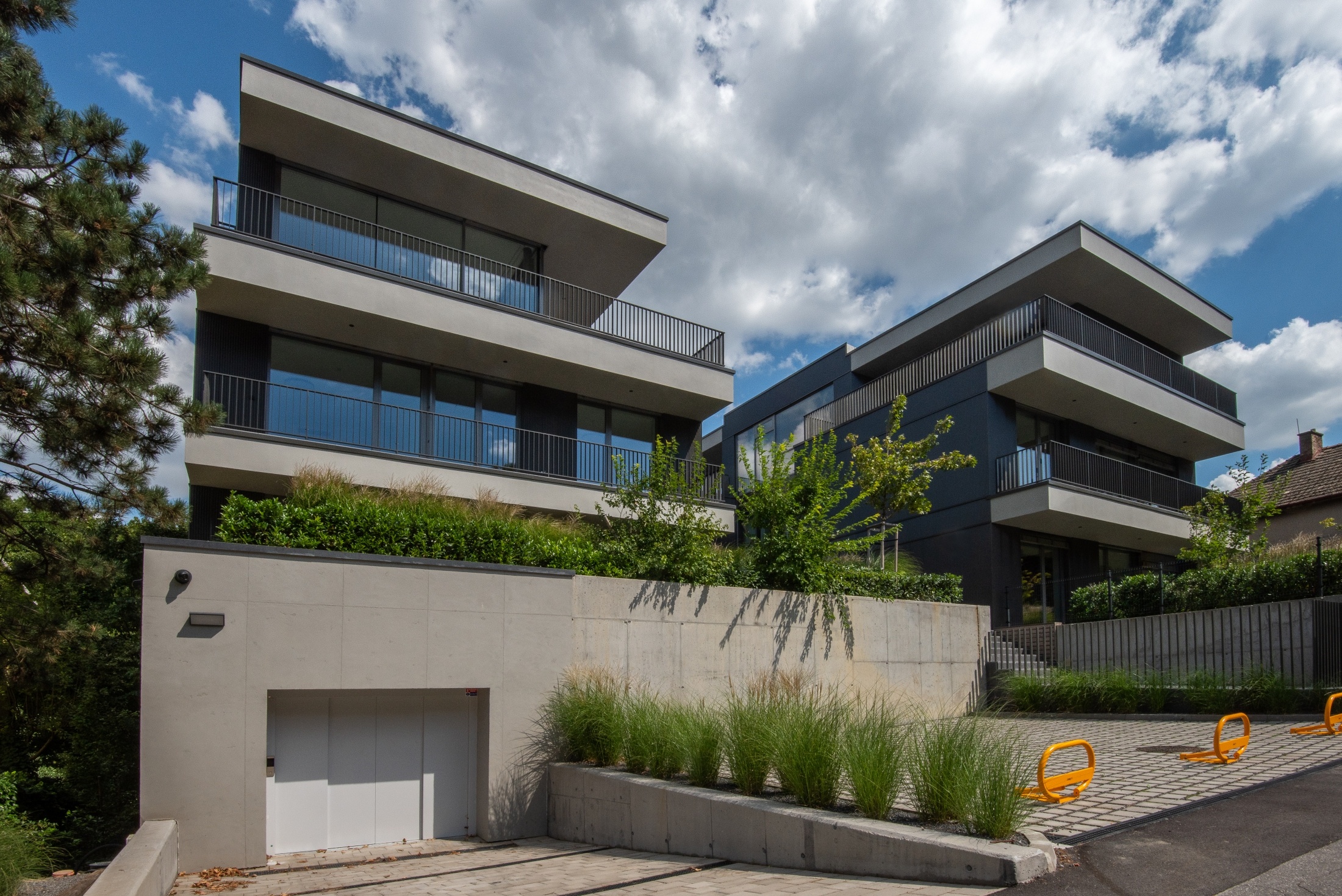
Two family houses near „Horsky park“ in Bratislava. On one side, the local but rather busy traffic of Budkova Street, on the other, forest silence. The houses are located in a relaxed street development of detached family houses. The context of the surrounding development, as well as the parking conditions, allowed for a distance from traffic, thanks to which a green filter was created in the front yard of family houses - in the front garden on the overgrown terrain, but also in a large-scale concrete flower pot or on the roof of the underground floors. When the trees grow, both houses will be immersed in greenery, not only from Horsky park, but also when seen from the street. The perception of what is happening on the street also helps to eliminate the elevation of the ground floor above the level of the sidewalk, in order to distance it as much as possible from the privacy of the apartment dwellers. Two levels of underground floors as seen from the street, contain garages accessible by car elevator and a two-story administrative space facing Horsky park. There are a total of five apartments with various layouts on the above-ground floors. The living areas are oriented towards the park with a large terrace or a comfortable balcony. The atmosphere of the forest park is transferred to the interiors of the apartments and administrative spaces through the large glazing and outdoor terrace. Cooperation: Eugen Kullman; Photo: Soňa Sadloňová